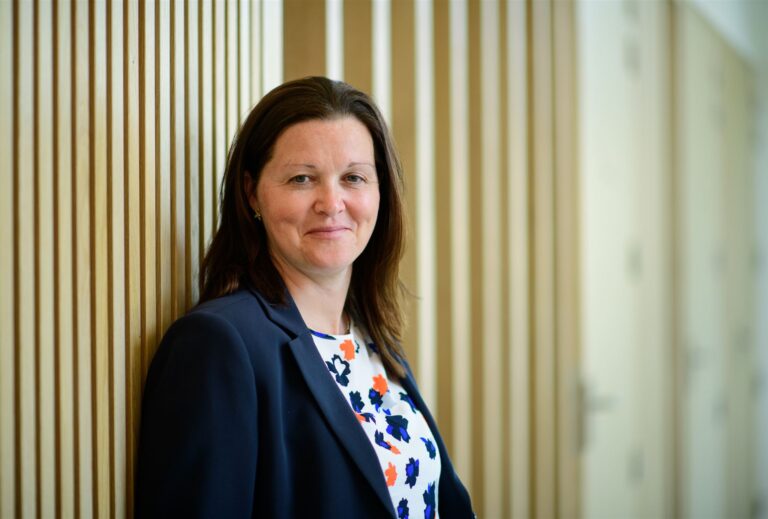
LCL welcomes Ruud Van den Bergh as its new Energy Efficiency Expert. With a background in electromechanics and years of experience in HVAC regulation in critical environments such as hospitals and airport infrastructure, he brings deep technical knowledge into the Critical Infrastructure team. We sat down with Ruud to explore how he found his way to LCL, what motivates him in this role, and how he sees energy efficiency in data centers evolving over the coming years.
Ruud began his career in HVAC installation and control engineering. He worked in technical environments, such as hospitals and airport infrastructure, where reliability is essential. His first connection with LCL dates back several years. While working for an HVAC and controls contractor, he helped optimise an existing installation so it could operate seamlessly alongside a new build at LCL Brussels-North.
When LCL encountered a similar integration challenge years later, Ruud was contacted again. Around the same time, he saw an open vacancy at the company. “When I saw the vacancy on LinkedIn… it was like they took my CV and put it in the job description,” he says. Moving from external project support to an internal role felt like a natural next step. What convinced him was not only the technical match, but also the company’s mindset. He found sustainability truly embedded in the way of working.
A multitechnical mindset
At LCL, Ruud focuses on optimising energy use and structurally lowering consumption. Data centers bring together cooling systems, electrical infrastructure, control technologies and operational processes in one tightly interconnected environment. That complexity is exactly what appeals to him. “It’s the multitechnical aspect, where different disciplines come together: I find that really interesting,” he explains. “And that complexity raises the bar. In a critical environment like a data center, there’s little room for trial and error. You can’t work empirically. You have to analyse, calculate and think things through before making adjustments.”
For Ruud, energy efficiency starts with fundamentals. “Energy you don’t consume is energy you don’t need to compensate for.” In practice, that means scrutinising airflow, cooling performance and control parameters. When airflow is properly managed and systems are correctly tuned, installations do not need to work harder than necessary. The cumulative impact of targeted, well-considered adjustments and finetuning delivers measurable gains over time.
What this means for our customers
Ruud’s arrival strengthens in-house expertise at a time when energy markets and regulatory frameworks are evolving rapidly. Customers increasingly assess the broader footprint of their operations, including the infrastructure that supports their IT. Energy efficiency and sustainability are interconnected across that value chain.
That broader context makes collaboration essential. In a colocation data center, efficiency is a shared responsibility. LCL operates the infrastructure, while customers determine how their IT environments are configured and managed. Clear communication is therefore key. “It starts with awareness,” Ruud says. “When our customers have the right insights, they can fine-tune airflow and optimise their own setup. This ensures efficient operation of their infrastructure and helps save energy: a win-win.”
Looking ahead
“As energy systems become more dynamic, technology will play an increasingly important role in supporting that transition,” Ruud says. “Pressure-independent control valves, for example, enable precise flow regulation as system loads vary. Artificial intelligence offers potential as an additional optimisation layer on top of existing control systems, with self-learning models that continuously refine forecasts and correct deviations as conditions change. When properly implemented, it could help ensure that we manage the energy we have more intelligently and more efficiently, which is ultimately what sustainability is about.”
Looking forward, what motivates Ruud most is seeing complex systems perform measurably better as a result of thoughtful optimisation. “At the end of a project, being able to say: look, this is the percentage of energy we’ve saved. That’s where I’ll find my satisfaction.”